ACADEMY
WHAT IS ROLL FORMING? A PRACTICAL INTRODUCTIONROLL FORMING VS PRESS BRAKE: WHICH ONE, WHEN?HOW TO CHOOSE A SERVO FEEDER STRAIGHTENERHOW TO CHOOSE A DECOILER (UNCOILER): WHAT TO CHECKHOW TO CHOOSE A STRAIGHTENER OR PRECISION LEVELERHOW TO CHOOSE A CUT-TO-LENGTH LINEHOW TO CHOOSE A SLITTING LINEBUYING A ROLL FORMING MACHINE: WHAT TO CHECKCOIL, STRIP AND PRESS TONNAGE CALCULATOR
How to Choose a Decoiler (Uncoiler): What to Check
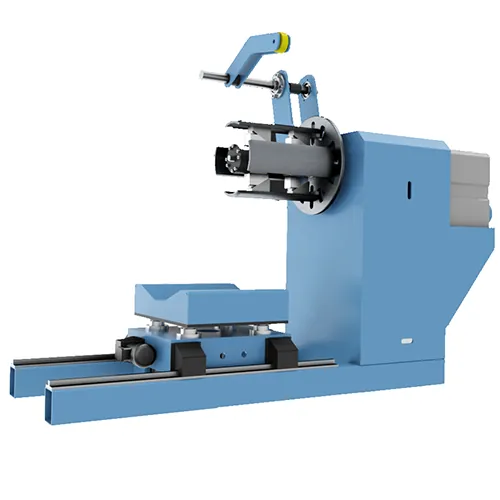
Coil data, decoiler types, mandrel expansion, drive and loop control, braking, coil loading and safety: what to check before you buy a decoiler.
The decoiler is the first machine of every coil line. If it cannot hold, expand, brake and pay off the coil safely and smoothly, everything after it – straightener, feeder, press or roll former – suffers. Choosing the right decoiler starts with the coil, not with the machine.
1. Start with your coil data
Write down the full range of coils the line will process, not only the typical one:
- Maximum coil weight – including future coils from new suppliers
- Coil inner diameter (ID) – 508 mm and 610 mm are the most common for steel coils
- Maximum coil outer diameter (OD)
- Strip width range
- Thickness range and material strength – thick, high-strength strip stores a lot of spring energy
- Surface: pre-painted, stainless or aluminium coils need protection from marks
2. Choose the decoiler type
The right type depends mainly on coil weight, thickness and how often you change coils.
| Type | Typical use |
|---|---|
| Non-powered (manual) decoiler | Light coils, thin strip, low speeds; the feeder pulls the strip |
| Motorized decoiler with loop control | Most press feeding and roll forming lines; the drive pays off strip on demand |
| Hydraulic expanding decoiler | Heavier coils; mandrel expands hydraulically to grip the coil ID |
| Double-head decoiler | Frequent coil changes; the next coil is loaded while the first one runs |
| Decoiler with coil car | Heavy coils; the car lifts and centres the coil on the mandrel safely |
3. Mandrel and expansion
The mandrel must cover your whole ID range and hold the coil without slipping. Check the expansion range, how it is actuated (manual, pneumatic or hydraulic) and whether expansion segments or spacers are needed for a second ID.
4. Drive, loop control and braking
A motorized decoiler pays off strip into a loop in front of the straightener or feeder. The loop sensor – a dancer arm, ultrasonic or photo sensor – tells the drive when to run. Smooth loop control means no jerks on the strip and better feeding accuracy.
A brake keeps the coil from over-running when the line stops. For thick, springy material a hold-down arm and a peeler or threading table make coil opening safe.
5. Loading and safety
Loading a coil with a crane directly onto the mandrel is slow and risky. A coil car brings the coil to the mandrel height and centres it. Add guards, emergency stops and a coil hold-down arm, and make sure the decoiler is interlocked with the rest of the line.
Checklist before you request a quote
- Max coil weight, ID, OD, width, thickness and material grade
- Line speed and type of machine after the decoiler
- Expected coil changes per shift
- Available floor space and loading method (crane, forklift, coil car)
- Surface requirements and any special coatings
Frequently asked questions
What is the difference between a decoiler and an uncoiler?
Nothing – both names describe the machine that holds the coil and pays off the strip into the line.
Do I need a motorized decoiler?
For heavier coils, higher speeds or a servo feeder that should not pull the full coil weight, yes. A motorized decoiler with loop control protects feeding accuracy.
When is a coil car needed?
When coils are too heavy or too wide to be placed on the mandrel safely by crane or forklift, and when coil changes must be fast.
Related machines
Request a quote
Send us your profile or part drawing, material and required output, and our sales engineers will propose the right solution.
GET QUOTE sales@rollandform.com